What The Hedge Knight Can Teach Us About Performing Under Pressure
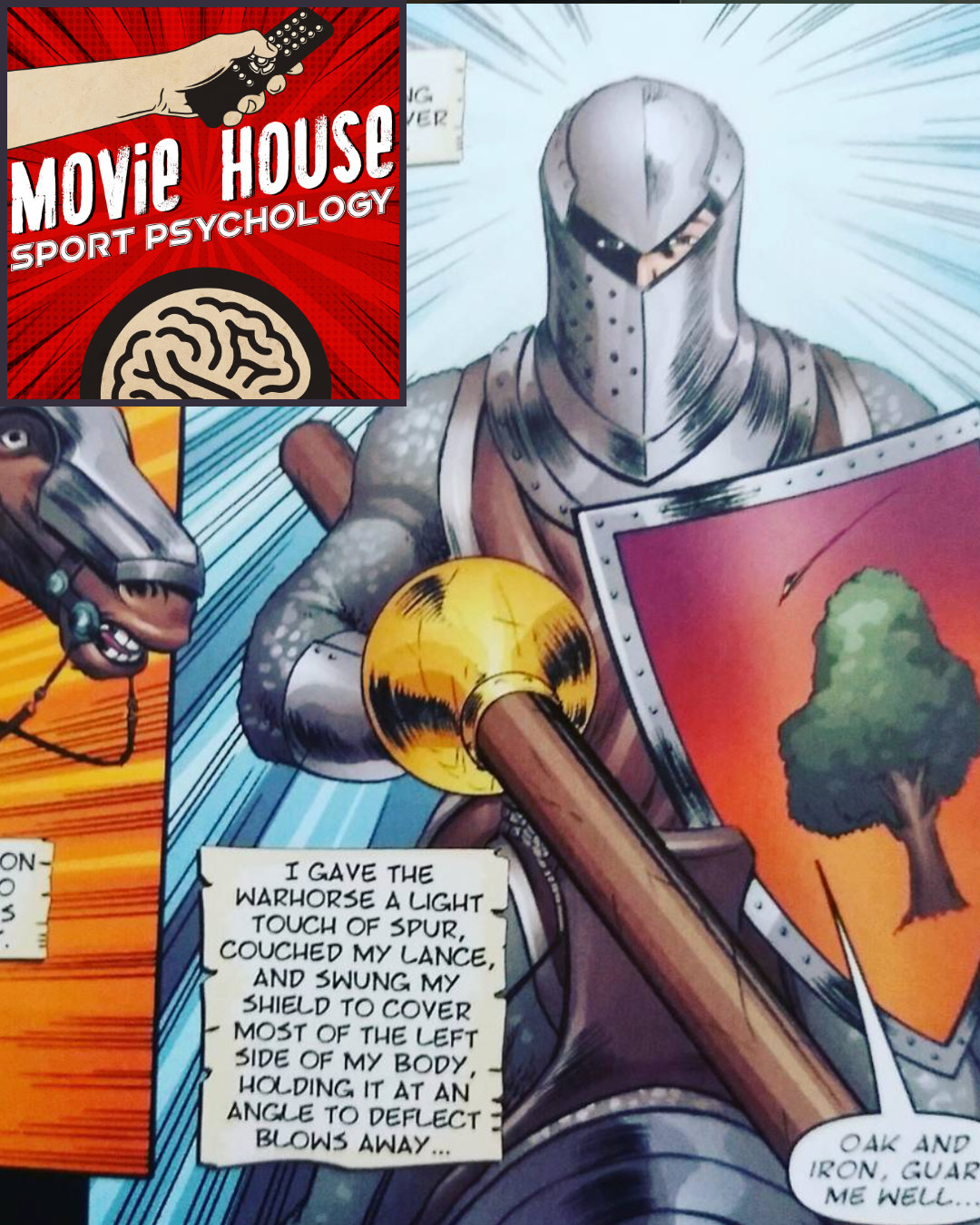
I’ve wanted to talk about The Hedge Knight for a while.
So, yes, this is a sport psychology article about a George R. R. Martin novella set in Westeros. I’m okay with that.
With the HBO series A Knight of the Seven Kingdoms coming up, it seemed like a good time to finally do it. I talked about the book on a recent episode of Movie House Sport Psychology, and there’s actually a lot in this story that reminded me of what athletes experience when they have to perform under pressure.
If you haven’t read The Hedge Knight, there are some spoilers ahead. I’d recommend reading it first. I’m also a big fan of the audiobook, narrated by Harry Lloyd. My wife and I listened to it on road trips, and there were definitely times when we took the long way home because we wanted to keep listening.
Dunk is nervous. Very nervous.
Dunk, or Ser Duncan the Tall, is about sixteen years old when the story begins. He’s huge, inexperienced, and trying to figure out how to be a knight after the death of his mentor, Ser Arlen.
Eventually, Dunk finds himself in a Trial of Seven, fighting alongside several other knights.
And this is where the story gets interesting from a performance psychology perspective.
Dunk is sitting on his horse before the fight thinking, essentially, How did I get myself into this? What am I supposed to do? Am I completely screwed?
That probably sounds familiar to anyone who has competed in sports.
Maybe you’ve had a moment before a race, game, match, presentation, or performance when your brain suddenly decides to review every possible way things could go badly.
Dunk starts to freeze. He feels anxious. He worries that he has forgotten everything he knows.
And then the fight starts.
Fall back on your training
Dunk doesn’t suddenly become fearless.
Instead, he starts doing the things he has practiced.
Shield up. Lance ready. Pay attention to what is in front of him.
He remembers how to move.
That matters because when we’re under pressure, we don’t always have access to the calm, rational version of ourselves. Sometimes there is too much happening at once. Your attention narrows. Your thoughts get loud. You start questioning things you normally do without thinking.
That’s one reason training matters.
The goal isn’t to make sure you never feel anxious. You may feel anxious anyway. The goal is to have something to fall back on when your brain is making things more complicated than they need to be.
Dunk has some pretty good examples of this.
“Up”
At one point, Dunk repeatedly uses the word “up” to keep himself going.
This one hit home for me.
I competed in weightlifting, and there is a point in a heavy lift where the weight can suddenly feel like it weighs about three times what it actually weighs. You’re trying to finish a clean and jerk or a snatch, and somebody is yelling, “Up!”
And you yell it in your head too.
Up.
It’s simple. It gives you something to do.
Athletes use cue words for exactly this reason. A good cue can help direct your attention toward the thing you actually need to do instead of letting your brain wander into everything that could go wrong.
Dunk does this throughout the fight. He reminds himself where to look. He reminds himself how to hold his shield. He focuses on the next action.
He doesn’t need a motivational speech.
He needs something useful to focus on.
You can be anxious and still perform
This is probably my favorite part of Dunk’s story from a sport psychology perspective.
He is scared.
He doubts himself.
He has negative thoughts.
He makes mistakes.
And he keeps going.
That’s a much more realistic picture of performance than the idea that confident athletes simply stop feeling nervous.
Sometimes performing well means figuring out what to do while your brain is telling you that you can’t do it.
Dunk is certainly not the most polished knight in Westeros. He’s inexperienced, he’s figuring things out as he goes, and he occasionally makes some questionable decisions.
But he keeps coming back to what he knows.
For athletes, that can be a pretty useful lesson.
You don’t have to feel perfectly confident before you perform. You don’t have to get rid of every anxious thought. Sometimes you just need to know what your next move is.
And then do that.
Up.
Sport Psychology for Athletes in Los Angeles and the South Bay
Whether an athlete is dealing with performance anxiety, confidence issues, perfectionism, or simply struggling to perform the way they know they can, we can work on the mental side of performance without expecting them to become a completely different person.
I provide sport psychology services for athletes in Los Angeles and the South Bay, as well as throughout California through telehealth. If you're an athlete, parent, or coach looking for support, you can learn more about sport psychology for athletes in Los Angeles and sport psychology for athletes in the South Bay, or schedule a free phone consultation to see whether working together makes sense.
And if you're a fan of Game of Thrones, A Knight of the Seven Kingdoms, or just really good stories about people trying to keep it together when everything goes sideways, check out the full episode.
Hopefully, the HBO series does Dunk justice.
Either way, I’m going to be watching.